How Much Water Does It Take to Make 1 Pound of Ground Beef
Photo via Wikimedia Eatables
You have already wasted hundreds of gallons of water today, and you probably don't even realize it. Where is all this invisible h2o going, you lot ask? The respond is simple: our food. Y'all will never see the majority of water you consume in your lifetime, and this is because food comprises ⅔ of the average American'due south h2o footprint. Nada that lands on your dinner plate gets there without the use of water: crops tin't flourish without water; the grain we feed our livestock needs water to abound; and fifty-fifty the almost candy, bogus foods use water during the manufacturing procedure. In fact, the agronomics manufacture is responsible for approximately fourscore% of the h2o used in the U.S. And then—how to cut downwardly on your water footprint without starving yourself? It's important to realize that when it comes to water, non all foods are created equal. In general, meat has a much larger water footprint than fruits, vegetables and grains. This is considering of the massive amounts of virtual h2o that go into creating nutrient for livestock. Beef—which is the second most popular meat in the U.S.—has the largest h2o footprint out of all types of meat, taking a whopping ane,800 gallons of water per pound. Obviously, cutting meat out of your diet altogether would exist a bully way to curb your personal h2o footprint. But if the thought of living a burger-free existence is too much to comport, not to worry—there are other ways to reduce your water footprint without giving up steak forever.
Check out more videos from VICE:
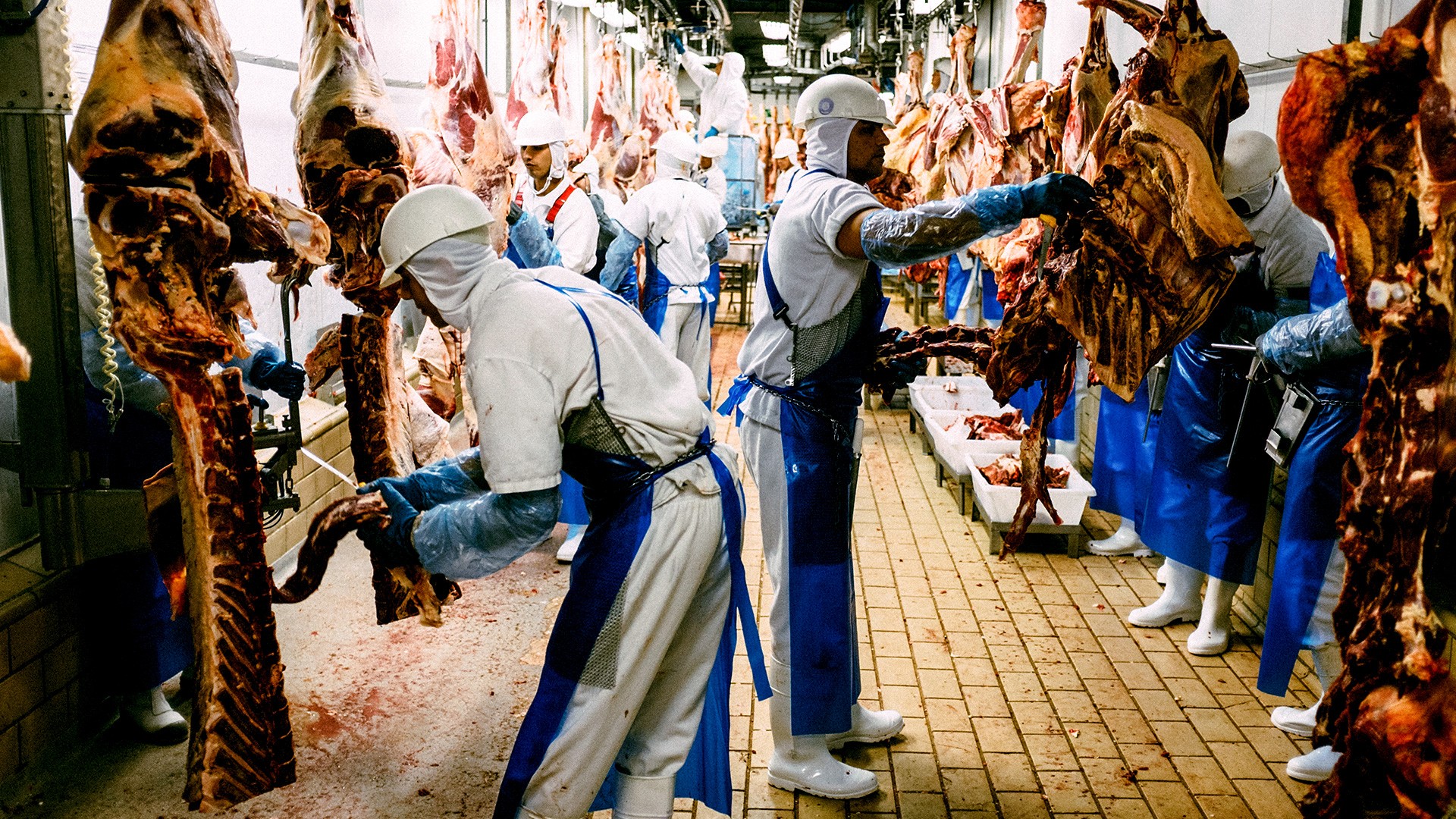
For some tips on where to beginning, VICE Impact talked with Peter Hanlon, Deputy Managing director of Programs at GRACE Communications Foundation—a leading, national not-profit devoted to promoting sustainability in food, water and energy systems—to get some answers. What goes into our water footprint, and how does food fit into that? When we talk about the h2o footprint, it's really near "virtual water" utilize versus "direct water" use. About people are used to thinking about their directly water employ—and then, water that comes out of the tap, out of the shower, flushing the toilet, etc. Simply virtual water is the water that goes into producing the food we eat, the free energy we utilise, and all the products we buy. People never see their virtual water use, so it's a harder concept to grasp. But it'south really a key concept, because the largest part of our h2o footprint is the water that'southward used to abound the nutrient that we eat. Why does meat have a greater h2o footprint than fruits, vegetables or grains? There'southward something called a "feed conversion ratio," which tells us how quickly livestock can plough whatsoever grain or feed that they're eating into mass. Some animals are pretty efficient, just cows are not so good at that. It takes a lot of grains or grasses to produce and abound these larger animals for meat. And all those grains and grasses take water to grow in turn. So the water footprint of meat is greater, because you lot're using products from lower on the nutrient concatenation to grow something larger. Are there differences between the water footprints of meat raised on a mill farm versus meat raised on a free-range farm? When nosotros're talking well-nigh raising livestock, a central concept to understand is that the water footprint is actually made of three parts: there's the green water footprint, the blueish h2o footprint and the grey water footprint. The green water footprint, when it comes downward to information technology, is essentially rainfall. The blue h2o footprint is the amount of h2o that'south extracted from reservoirs, surface water and groundwater to irrigate fields. And then the greyness water footprint is an indicator of the amount of pollution you lot're causing. For example, if yous expect at beefiness that is pasture raised, we're talking nearly a green h2o footprint because the animals are eating grass that'due south beingness fed past rainwater. But if you await at a more industrial system, nosotros're talking nigh a larger blue water footprint; those cattle kickoff on grass as well, but somewhen they are switched over to feedlots where they're fed grains which are much more intensive in their needs for irrigation. Then there's as well the pollution aspect, or grey h2o footprint. On a pasture-raised system, the waste product that the cattle are producing is actually used as fertilizer, then it's a do good. Merely if you're talking about an industrial system, you have 100,000 caput of cattle all pooping in ane place. And all that waste is typically moved into a manure lagoon, which is a massive pond of waste that often tin leak. Waste can leak into the groundwater, information technology can leak into nearby bodies of water, and then instead of that waste matter being a do good, it can actually exist a pollutant. On a personal level—if yous don't want to go full vegetarian, how can you reduce your water footprint and yet swallow meat? First, eat less meat and better meat. In terms of "less meat," you tin can become "flexitarian," yous tin can do "Meatless Mondays," or yous tin even merely shrink the portion of meat that you're serving. Those are all positive things and you don't necessarily have to "go vegetarian." And then in terms of "improve meat," if you choose pasture raised meat certified by a quality third party group—something similar Animal Welfare Approved or Certified Humane—you can trust that meat volition take less impact on water resource than conventionally raised meat. The second method to reduce your water footprint, would be eating fewer processed foods. And then finally, the tertiary method of reducing your water footprint is to waste less food. About twoscore percent of the food that's raised in the US is ultimately never eaten, and that accounts for virtually a quarter of the fresh water nosotros swallow in this country. All that waste is only an abhorrent corruption of resources that we take. Even the simplest thing in the world, like planning your meals before yous go to the market, can salve those resources. This interview has been edited and condensed for clarity.
Whole foods use less water than processed foods. Once you beginning processing foods, that takes boosted water for many different services—annihilation from creating oils that are used to cook foods to powering the plants that are processing these foods. That all raises the water footprint.
Source: https://www.vice.com/en/article/d3z8az/1800-gallons-of-water-goes-into-one-pound-of-meat

Post a Comment for "How Much Water Does It Take to Make 1 Pound of Ground Beef"